
PCB Buffer
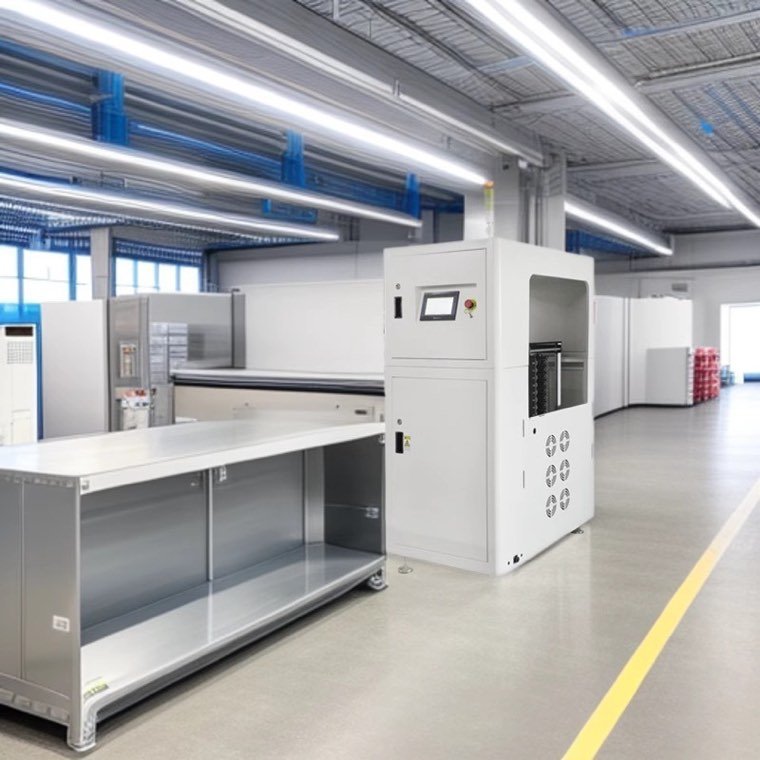
SMT PCB Buffer Machine Series: Magazine, NG/OK and Cooling Buffers
SMT PCB buffer series: SBN250/SBN330 NG buffers (FIFO/LIFO), S-TS500 FIFO storage, magazine, cooling and NG/OK buffers. SMEMA, 900 mm line height.
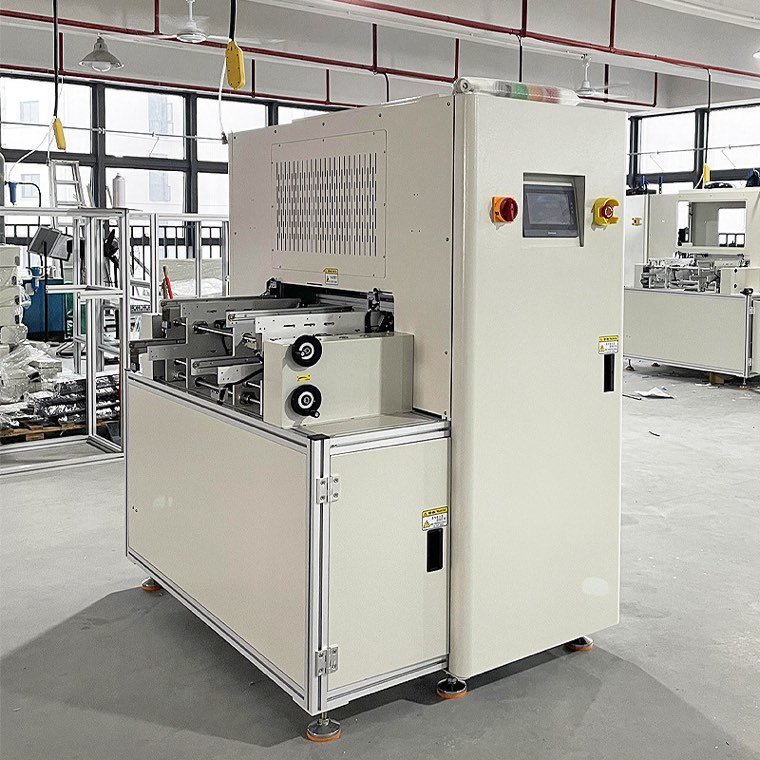
Keep the line running while one machine stops.
PCB buffers for every gap in the SMT line: magazine type buffers for loader and AOI duty, NG/OK selectors after inspection, post-reflow cooling buffers and SMEMA transfer buffers that decouple downstream stoppages from placement speed.
Lane width, board size and line height are confirmed against your conveyor layout before quotation.
Model specifications published on www.smthelp.com (SBN250 / SBN330 NG buffer, S-TS500 temporary storage) are listed first; the other buffer types are from the buffer series product page.
At a glance
- SBN250 / SBN330 — NG buffer conveyors with FIFO, LIFO and pass-through modes
- S-TS500 — temporary storage machine, up to 20 PCBs, first in first out
- 6 modes — on the EDM magazine type buffer family
- 20 boards — NG/OK and cooling buffer queues
- 900 mm — standard transport height, SMEMA interface
One blocked machine stops the whole line
Without a buffer, the fastest machine runs at the speed of its slowest neighbour.
- Cascade stoppages: An AOI pause starves the placement machine and backs up the printer.
- Hot boards with nowhere to go: Reflow output has no queue, so operators carry hot boards.
- NG boards block OK flow: A rejected board holds good product until someone clears it.
- Changeover dead time: Magazine swaps empty the line segment every shift.
- Cycle-time mismatch: A faster upstream machine feeding a slower one leaves gaps all day.
Pick the buffer that matches the bottleneck — Feature, Advantage, Benefit
Buffer types in the series.
NG buffer: SBN250 / SBN330 NG buffer conveyor
After AOI / SPI.
- Feature: Stores NG boards after the tester (AOI/SPI) and moves them up for inspection; FIFO, LIFO and pass-through modes; frequency-inverter indexing; leadscrew width adjustment; enclosed design.
- Advantage: Rejected boards leave the main flow without stopping it.
- Benefit: Inspection stops stop being line stops.
Key points: FIFO / LIFO / pass-through · 12 PCB buffer (or specify) · SMEMA
Temporary storage: S-TS500 temporary storage machine
Buffer between SMT machines.
- Feature: PLC-controlled buffer with automatic alarm, first-in first-out storage of up to 20 PCBs, touch-screen operation and a multilayer conveyor in an aluminium alloy turnover box.
- Advantage: Absorbs short stops between SMT machines.
- Benefit: Placement keeps running while a neighbour recovers.
Key points: Up to 20 PCBs · FIFO · PLC + touch screen
Magazine buffer: EDM magazine type buffer
Loader and AOI duty.
- Feature: Queues boards in standard magazines with top and bottom pneumatic clamps, LED membrane panel and six operation modes; PCBs from 80 × 50 up to 500 × 280 mm.
- Advantage: Magazine storage gives high capacity in a small footprint.
- Benefit: A loader or AOI can stop for a changeover while placement keeps running.
Key points: 6 modes · Up to 500 × 280 mm PCB · Pneumatic clamps
Cooling / NG-OK: Cooling and NG/OK dual-track buffers
Reflow exit and inspection output.
- Feature: Single or dual-track cooling buffers (950–1500 mm lengths, 100 W drive, 20-board queue) and dual-track NG/OK buffers for SPI/AOI duty.
- Advantage: Boards cool in queue and rejects divert to their own lane.
- Benefit: Consistent cooling time and good product never waits behind a reject.
Key points: 950–1500 mm · Single / dual track · NG/OK lanes
Specifications by model and type
SBN250 / SBN330 and S-TS500 values are from www.smthelp.com. The other types are from the buffer series product page.
SBN250 / SBN330 NG buffer conveyor (www.smthelp.com)
| Parameter | SBN250 / SBN330 |
|---|---|
| Function | Stores NG boards after the tester (AOI/SPI) and moves them up for inspection |
| Operating modes | First In First Out (FIFO), Last In First Out (LIFO), pass-through |
| Transport height | 900 ± 20 mm or specify |
| Transfer direction | L to R, or specify R to L |
| Belt type | ESD belt (round belt) |
| Cycle time | Approx. 10 s |
| Power supply | AC 110 V or 220 V, single phase; 250 VA max. or specify |
| Buffering capacity | 12 PCB or specify |
| SBN250 | 1000 × 910 × 1600 mm; PCB 50 × 50 – 330 × 250 mm; 160 kg; PCB thickness 0.6–4 mm |
| SBN330 | 1200 × 990 × 1600 mm; PCB 50 × 50 – 460 × 330 mm; 300 kg; PCB thickness 0.6–4 mm |
| Interface | SMEMA compatible |
S-TS500 temporary storage machine (www.smthelp.com)
| Parameter | S-TS500 |
|---|---|
| Installation dimensions | L600 × W920 × H1200 mm |
| PCB size | Max. 500 × 390 mm |
| Direction | L to R / R to L |
| Transfer height | 920 ± 30 mm |
| Pitch selection | 25, 50 |
| Maximum stored PCBs | 20 |
| Power supply | 220 V, 50 Hz |
| Drive | 120 W motor drives the magazine into the elevator; stepper drive motor; multilayer W3.5 flat belt; precision ball screw |
| Control | PLC with automatic alarm; first in, first out; touch-screen control panel |
EDM magazine type buffer
| Parameter | EDM300 / 330 / 360 |
|---|---|
| EDM300 | 1050 × 1300 × 1805 mm; PCB 80 × 50 – 500 × 280 mm; magazine to 350 × 250 mm |
| EDM330 | 1250 × 1300 × 1805 mm; PCB to 498 × 280 mm; magazine to 480 × 400 mm |
| EDM360 | 1550 × 1300 × 1805 mm; PCB to 500 × 280 mm; magazine to 600 × 400 mm |
| Operation modes | 6, selectable from the LED membrane panel |
| Utilities | AC 110/220 V single phase, max 230 VA; air 4–6 bar, 150 l/min max |
| Line interface | SMEMA; transport height 900 ± 20 mm (or customer specified); L→R or R→L |
Other buffer types
| Parameter | Series |
|---|---|
| S-type magazine buffer | Pusher type; AOI and SMT duty; NG/OK 20 boards per cycle; three chassis sizes; 120–250 V, 250–380 W |
| Post-reflow cooling buffer | Single or dual track; lengths 950–1500 mm; 100 W drive; 20-board queue |
| NG/OK dual-track buffer (SPI/AOI) | 680 × 1110 × 1700 mm; 370 W; 100–230 V; air 4–6 bar, 10 l/min max; 210 kg |
| Certification | RoHS Certificate of Compliance for the PCB Conveyor & Buffer line (IEC 62321 test series) |
Final track count, lane width, board size range and transport height are confirmed after we review your line layout. Custom buffers are built to drawing.
Compatibility and interfaces: SMEMA, FIFO / LIFO, NG/OK, Cooling, After SPI / AOI, Reflow exit
Buffers and line duty
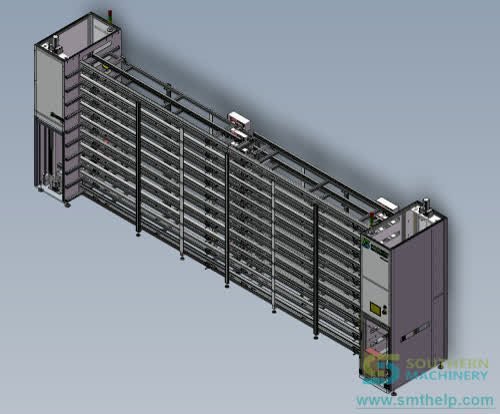
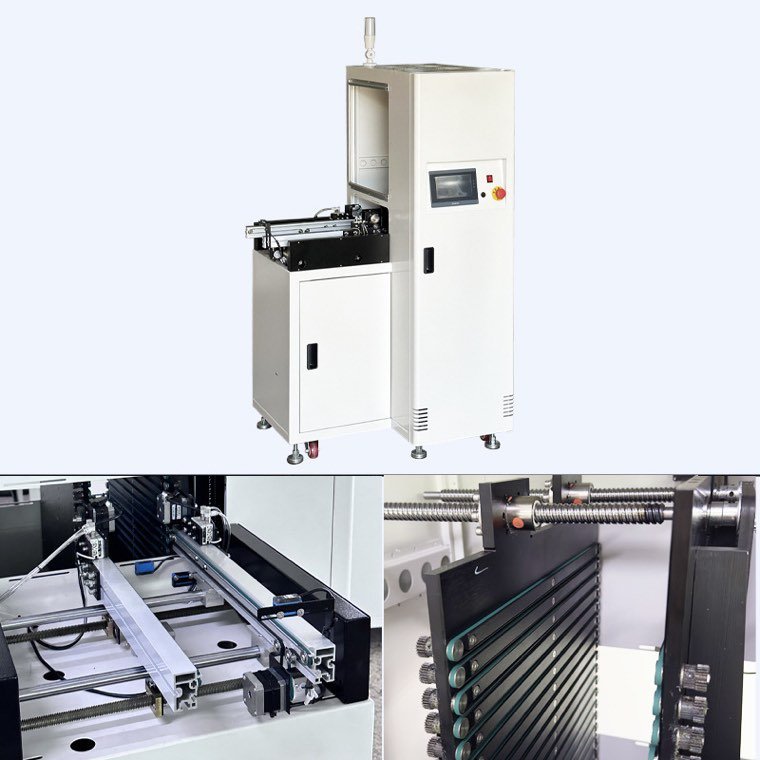
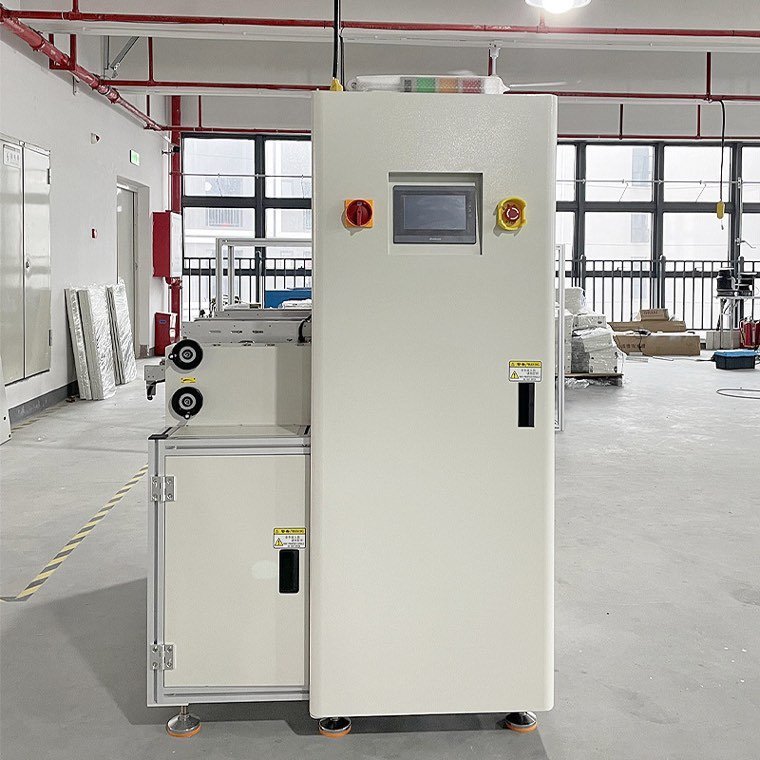
Watch the board handling family
From line layout to running buffer
- 1 · Review — Board size, line height and the two machines the buffer sits between.
- 2 · Consult — Buffer position mix and storage needed for each gap.
- 3 · Configure — Lane width, transport height, direction and control options; 3D drawings and RoHS certificate shared.
- 4 · Deliver — Buffers ship wired and tested for SMEMA lines.
- 5 · Support — Belts, sensors and control spares as needed.
Frequently asked questions
How many boards do I need to buffer?
Enough to cover your longest routine downstream stop. A 5-minute AOI stop on a 12-second cycle needs about 25 boards of storage. Send your cycle time and stop profile and we size the buffer.
Will it talk to my existing machines?
Yes. The buffers are SMEMA compatible with a standard 900 mm transport height (adjustable). Tell us the neighbouring machine models.
Magazine type or track type?
Magazine buffers hold the most boards in the smallest footprint and suit loader, unloader and AOI positions. Track buffers suit reflow exit and NG/OK sorting. Most lines use both.
What is the difference between the SBN250 and SBN330?
PCB range and size: SBN250 takes 50 × 50 – 330 × 250 mm boards, SBN330 50 × 50 – 460 × 330 mm. Both buffer 12 PCB as standard, or as specified.
Are custom layouts possible?
Yes. Track count, lane width, transport height, direction and control logic are built to order.
Engineering Review
Send PCB details for a practical machine recommendation.
Useful details: PCB type, board size, component list, monthly volume, current worker count, line layout and target automation goal.
Next step: Send your PCB size, cycle time and the machines on either side of the gap; we reply with the buffer type, storage calculation and quotation.
Engineering Review
Send PCB details for a practical machine recommendation.
Useful details: PCB type, board size, component list, monthly volume, current worker count, line layout and target automation goal.
Send your PCB size, cycle time and the machines on either side of the gap; we reply with the buffer type, storage calculation and quotation.